UI / UX
BMUNIS Dashboard
The BMUNIS Dashboard is a dynamic, real-time management platform designed to streamline the operations of the MUN..

Introduction
As someone deeply passionate about technology and problem-solving, I’ve always been drawn to projects that merge functionality with real-world impact. The BMUNIS Dashboard is one such project—it was designed to simplify and unify the complex operations of a large-scale Model United Nations conference. Instead of juggling multiple apps and manual systems, this platform brought everything into one place. Building it allowed me to combine my technical skills with an understanding of real conference needs, creating a tool that genuinely improved the way BMUNIS was managed.
Project Overview
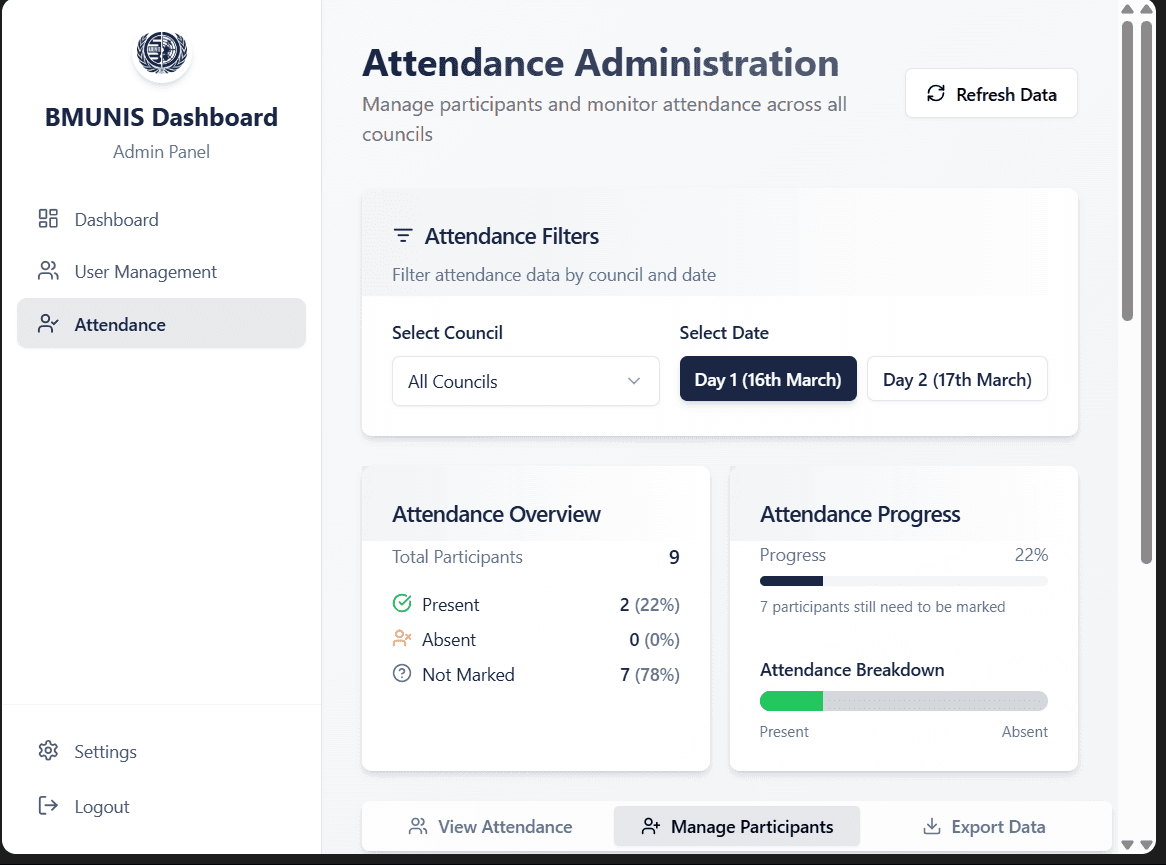
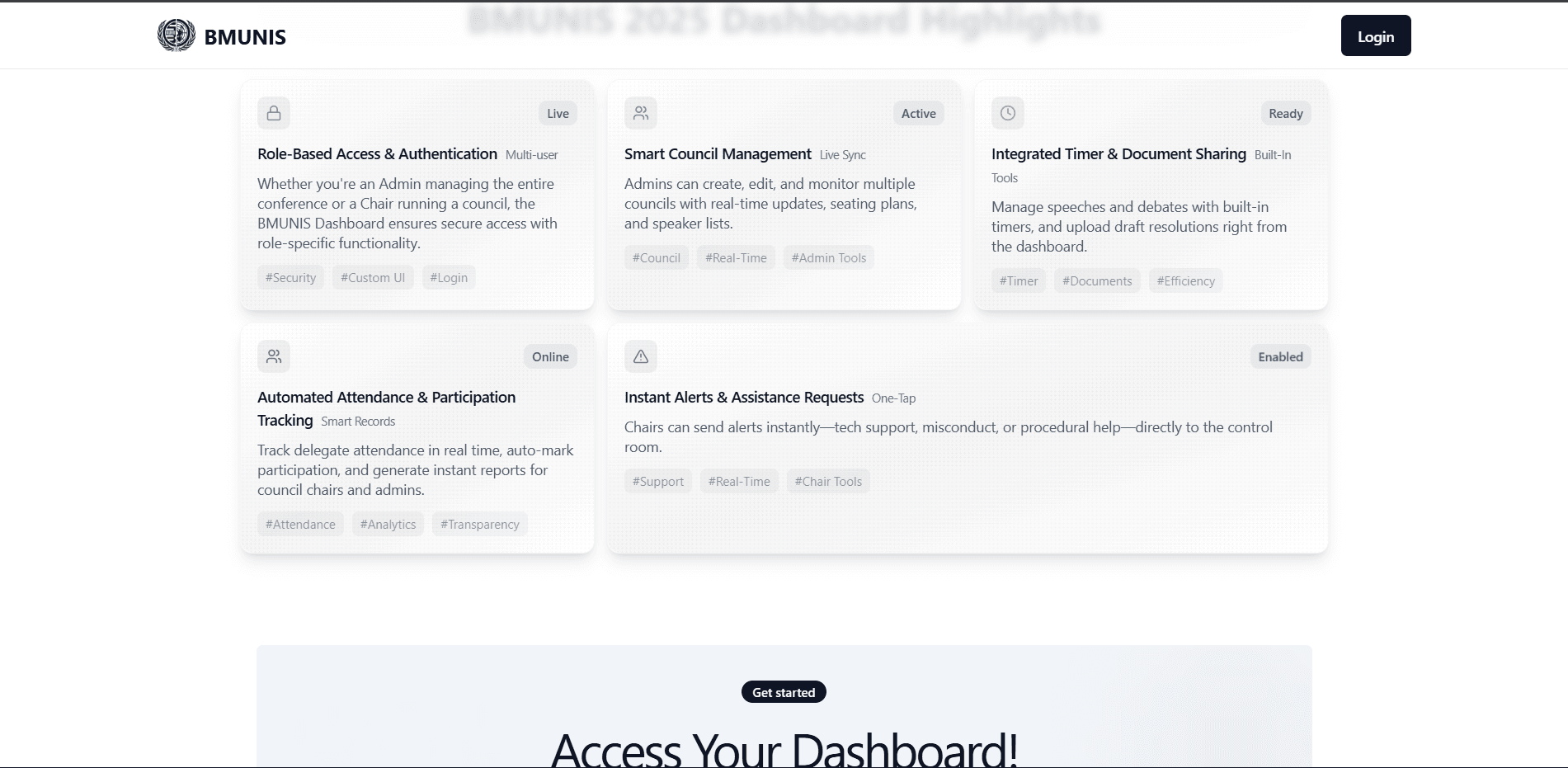
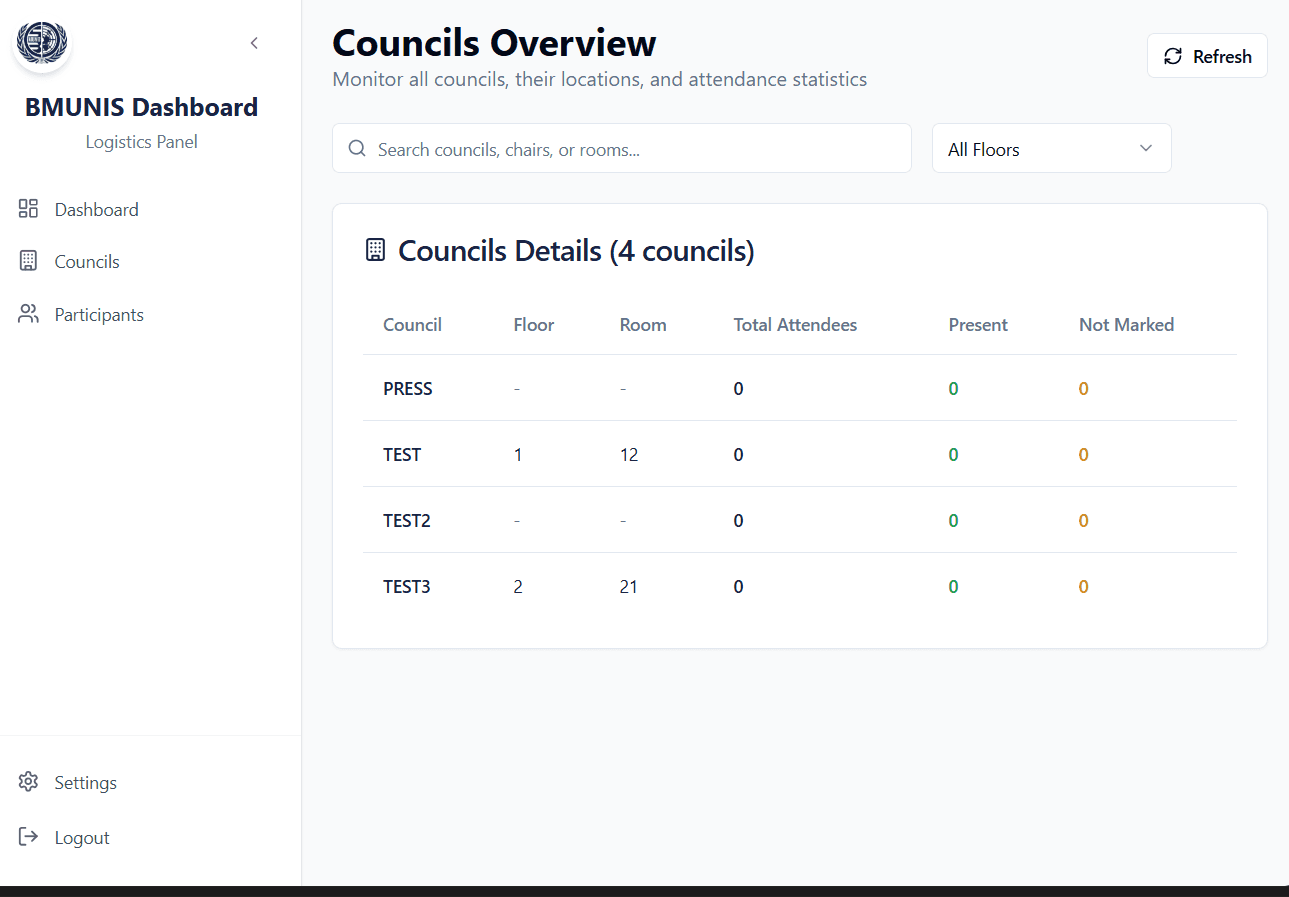
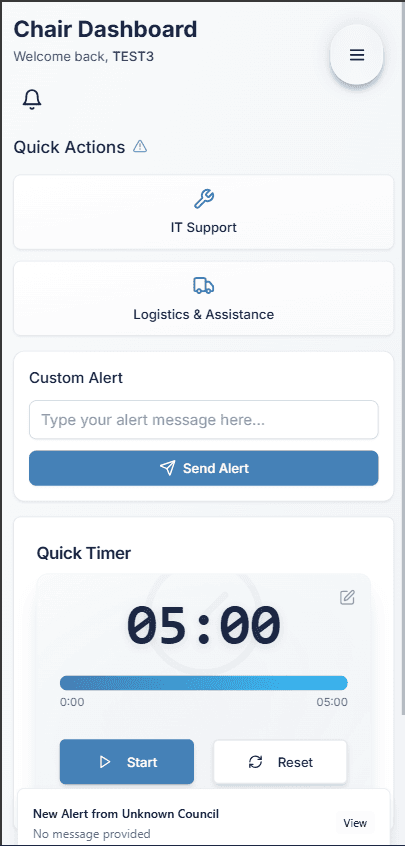
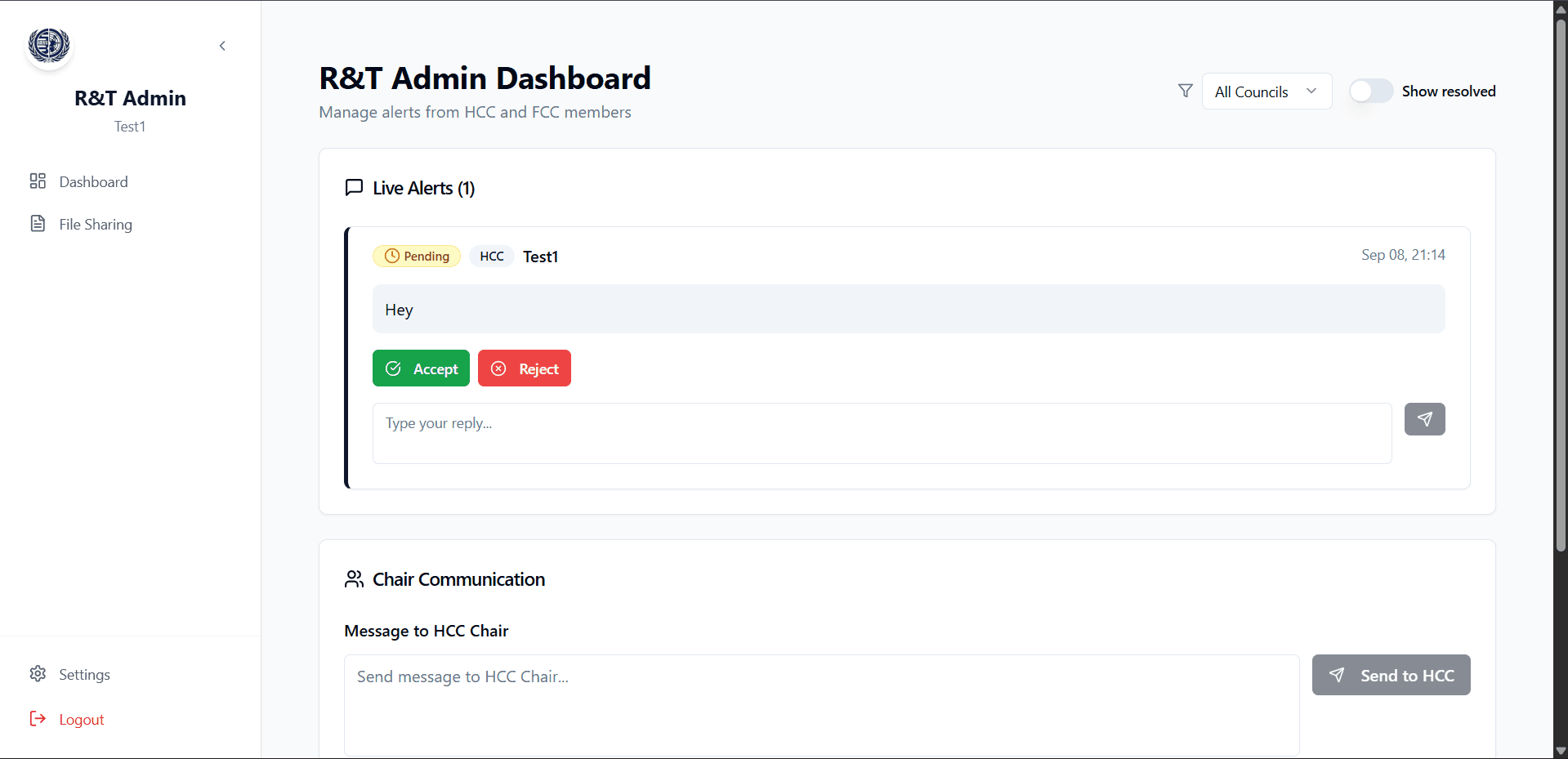
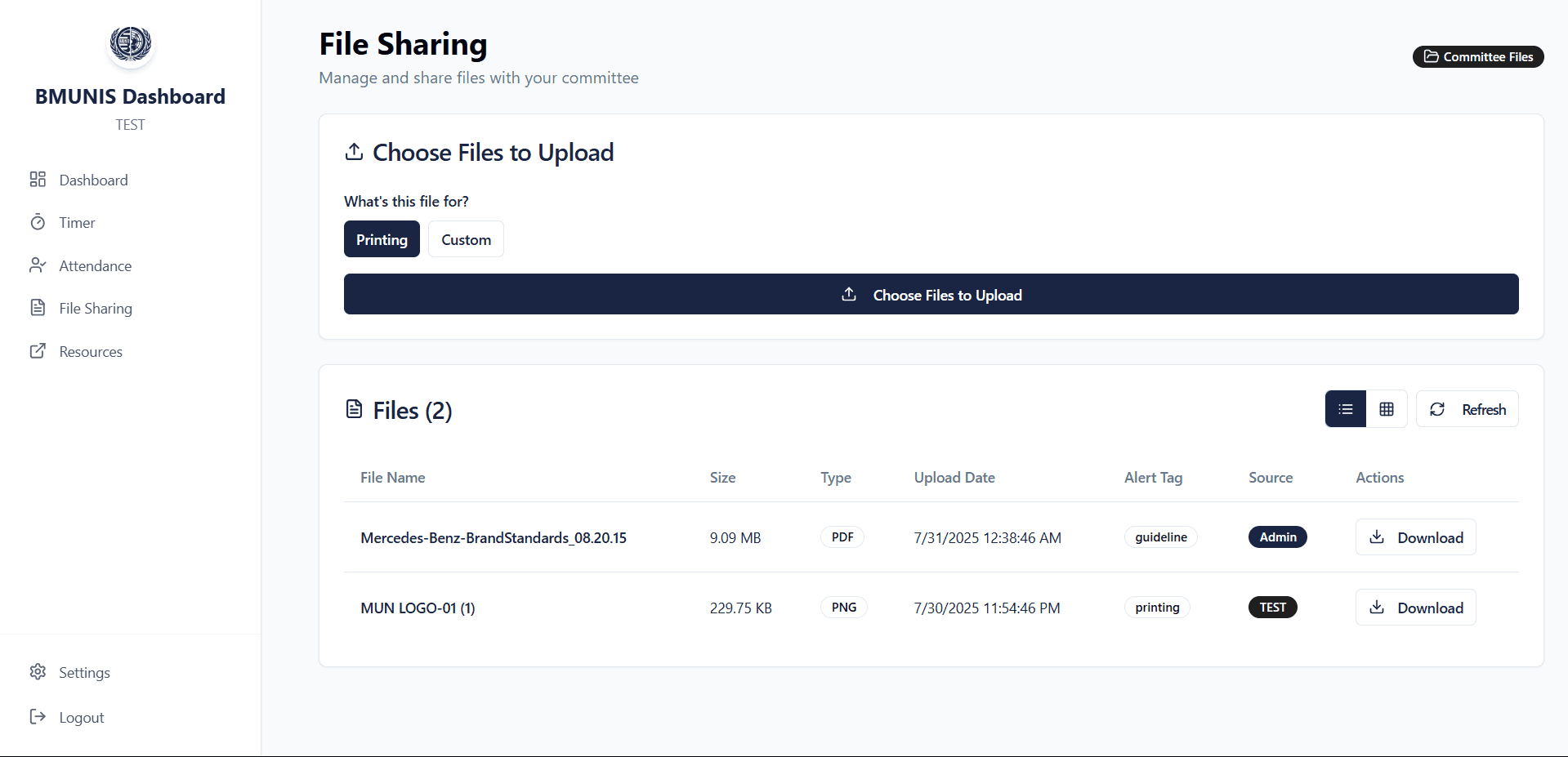
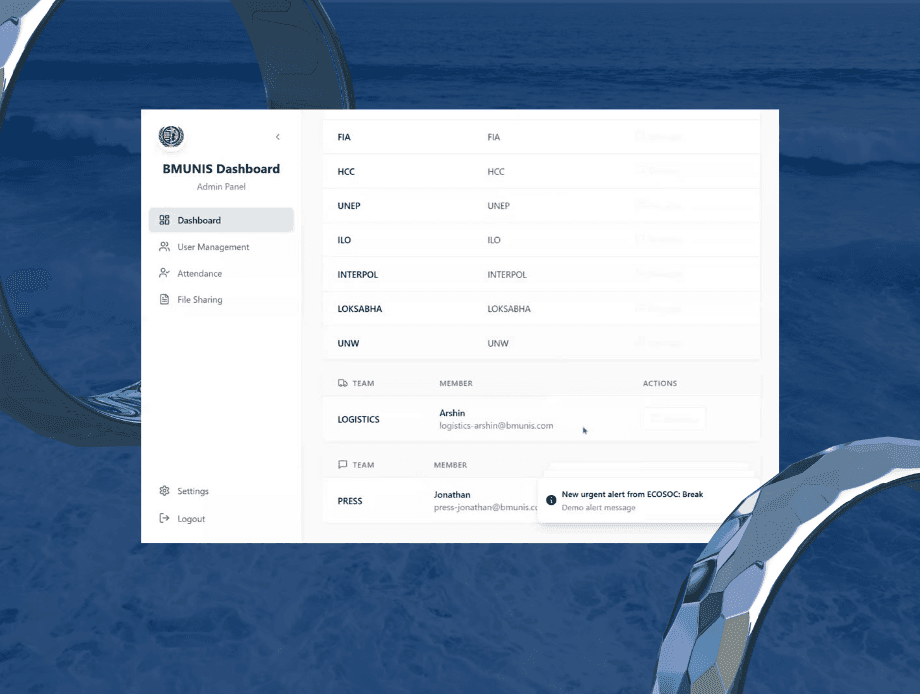
The BMUNIS Dashboard is a web-based management system built specifically for the Bahrain Model United Nations & International School Conference. It serves as a central hub where council chairs, admins, and organizers can coordinate in real time. Core features include instant alerts between chairs and admins, a live council status board, built-in timers for debate management, and secure file-sharing for draft resolutions and attendance sheets. By replacing fragmented workflows with one unified system, the dashboard became the backbone of the event, ensuring that operations were smooth, efficient, and transparent.
Development Journey
The idea began with a simple goal: reduce reliance on scattered tools like WhatsApp, Google Drive, and physical notes. From there, the vision grew into a complete ecosystem tailored to MUN conferences. I started with designing a clean and intuitive interface that chairs could use quickly during live sessions, then built an admin panel that offered complete oversight. Real-time communication was made possible through instant alerts, while the council status board gave organizers a bird’s-eye view of the entire conference.
As development progressed, I added advanced features such as timers for speeches and moderated caucuses, along with a file-sharing system that allowed draft resolutions to be uploaded, reviewed, and tracked securely. Each addition was carefully integrated to make sure the platform felt seamless—not like a collection of add-ons, but one cohesive tool.
Challenges and Learning
Building the BMUNIS Dashboard required me to think not only like a developer but also like an event organizer. I had to balance speed, security, and usability, ensuring the platform could handle live updates without overwhelming users. Coordinating how alerts, timers, and file systems worked together taught me valuable lessons in scalability and real-time systems. The process also reinforced the importance of designing for clarity and simplicity, especially when users are under time pressure in a live conference setting.
Final Thoughts
The BMUNIS Dashboard is more than just a project—it represents how technology can directly improve real-world experiences. By consolidating scattered workflows into one streamlined platform, it gave BMUNIS a stronger digital backbone and allowed chairs and admins to focus on what mattered most: running impactful debates. For me, it was an opportunity to combine technical skills with human-centered design, and it stands as a project I’m proud to have built.
600+
0 $
100 days